Everett Lufkin
The RainmakerEverett Lufkin, Great Benefit’s vice president of claims, becomes a key witness in Rudy Baylor’s case against the insurer. His testimony first establishes how the company handled claims, then turns the claims manual into evidence of concealment: Lufkin certifies that the manual he selected and produced is complete, only to be confronted with a missing Section U.
Identity and Role
Lufkin has worked at Great Benefit for eight years and has led its claims department for six. A hands-on manager, he is responsible for running the division and overseeing its work, though he does not personally supervise every individual claim. His position makes him an important witness about the company’s procedures, even as his restrained manner and careful answers initially make him seem difficult to draw out.
Before trial, Rudy deposes Lufkin as the vice president of claims. Lufkin is terse, speaking only in response to direct questions, and Rudy uses company documents to get him to acknowledge Great Benefit’s policy of post-claim underwriting. When an insured submits a claim, the initial handler obtains five years of medical records. In the Black family’s case, Great Benefit obtained records showing that Donny Ray Black had been treated for flu five years earlier. Although the flu had no connection to Donny Ray’s leukemia, Dot Black had not listed it on the application, and Great Benefit relied on it in one of its early denials.
Testimony in the Black Case
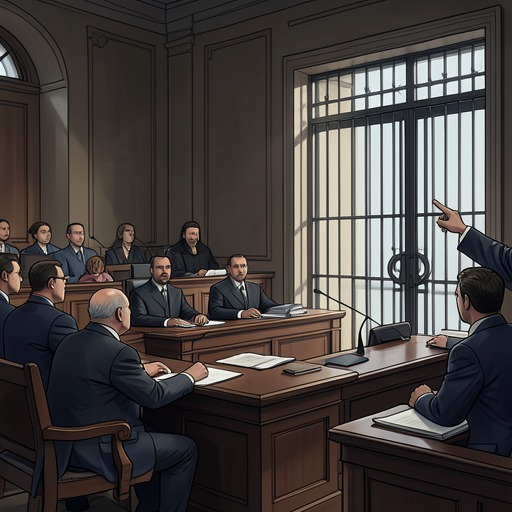
At trial, Rudy calls Lufkin as the first Great Benefit executive witness. Lufkin enters the courtroom after being summoned from the witness room, where the company’s witnesses have been sequestered. Rudy begins with the claims department’s responsibilities, letting Lufkin describe his authority before turning to the handling of the Black family’s claim.
Rudy asks Lufkin about Jackie Lemancyzk, the former claims handler responsible for the claim. Documents establish that her resignation was dated October 3, two days before she was scheduled to give a deposition in the case. Lufkin confirms the timing but says that she resigned for personal reasons, as her letter states. He denies firing her and says he did not know her well. Rudy’s questions place those answers beside the fact that she handled the claim; the following day, Lemancyzk is due to testify about a three-year affair with Lufkin.
Rudy has Lufkin confirm that the Black family’s claim file appears complete and then walks him through the company’s claims procedures. Lufkin explains the expected process as though the hypothetical claim were handled properly. Rudy next has him read the first seven denial letters sent to Dot and ask how each fits the claims manual. The letters’ formal, procedural treatment contrasts with the family’s repeated pleas for help while Donny Ray is dying.
Lufkin also reads the insulting denial letter known as the Stupid Letter. He says its author, who later left the company, was wrong, acknowledges that Great Benefit was wrong, and offers an apology in court. Rudy establishes that, to Lufkin’s knowledge, no written apology had been sent and that the company had not apologized before that moment. Lufkin answers in a dry, controlled manner; Rudy’s questions make the lateness and limits of the apology part of the testimony.
The Missing Section U
The claims manual becomes the turning point in Lufkin’s testimony. Rudy has emphasized it as the authoritative statement of company policy, and Lufkin confirms that it is periodically reviewed and updated. Asked whether the copy is complete, Lufkin says it is. He confirms that he was required to provide it in discovery, that Great Benefit’s lawyers supplied that copy, and that he personally selected it.
Rudy then asks Lufkin to turn to Section U. The request changes the atmosphere in the courtroom: Jack Underhall, Great Benefit’s in-house counsel, closes his eyes and lowers his head, while Kermit Aldy appears to gasp. Lufkin searches the manual and says that it has no Section U. Rudy produces another copy, obtained from Cooper Jackson, and the missing section becomes the focus of the courtroom. Lufkin is visibly stunned to have been caught with a manual that lacks the section he was asked to find. The testimony reveals that the discovery copy he vouched for was incomplete; the scene also indicates that Leo F. Drummond had not been told that Great Benefit had altered the manual.
Narrative Significance
Lufkin’s role in the case rests on the contrast between formal responsibility and limited personal accountability. He manages the claims division and certifies the file and manual placed before the jury, yet the documents and testimony expose troubling decisions within that system. His answers about the flu-based denial, the letters to Dot, and the absent Section U build from individual claim handling to the integrity of the company’s evidence.
The courtroom reversal depends on Lufkin’s own assurances. By affirming that the manual is complete and that he personally chose the discovery copy, he gives Rudy a precise basis for asking about the omitted section. Lufkin is not shown confessing to the alteration or explaining who removed Section U; the force of the moment lies instead in the gap between his confident certification and the missing material. His testimony turns a quiet corporate witness into the point at which Great Benefit’s disclosure problem becomes visible to the jury.